Sellers ask me all the time whether they need a termite report or a dry rot report. Here's the short answer: it's the same report.
What changes is what the inspector finds, and that depends a lot on where you live. Up here in El Dorado County, the story is usually dry rot, not termites. And if your agent doesn't understand that before you list, it can cost you thousands at the negotiating table.
What a "termite report" actually is
In California, the official name is a Wood Destroying Pests and Organisms inspection report. Everybody just calls it the termite report. A licensed pest control company inspects the home for anything that damages wood, and that includes termites, wood-boring beetles, and fungus.
The findings are split into two sections:
- Section 1: active problems right now, like live infestation or fungus damage that needs to be repaired.
- Section 2: conditions that are likely to cause problems later, like excess moisture, poor drainage, or earth-to-wood contact.
Section 1 items are usually the ones that get negotiated in a sale, and the ones that can trip up a buyer's loan.
Valley termites vs. foothill dry rot
Down in the valley, you'll hear about houses getting "tented." That's fumigation for termites, and it's a big, expensive, everybody-out-of-the-house job.
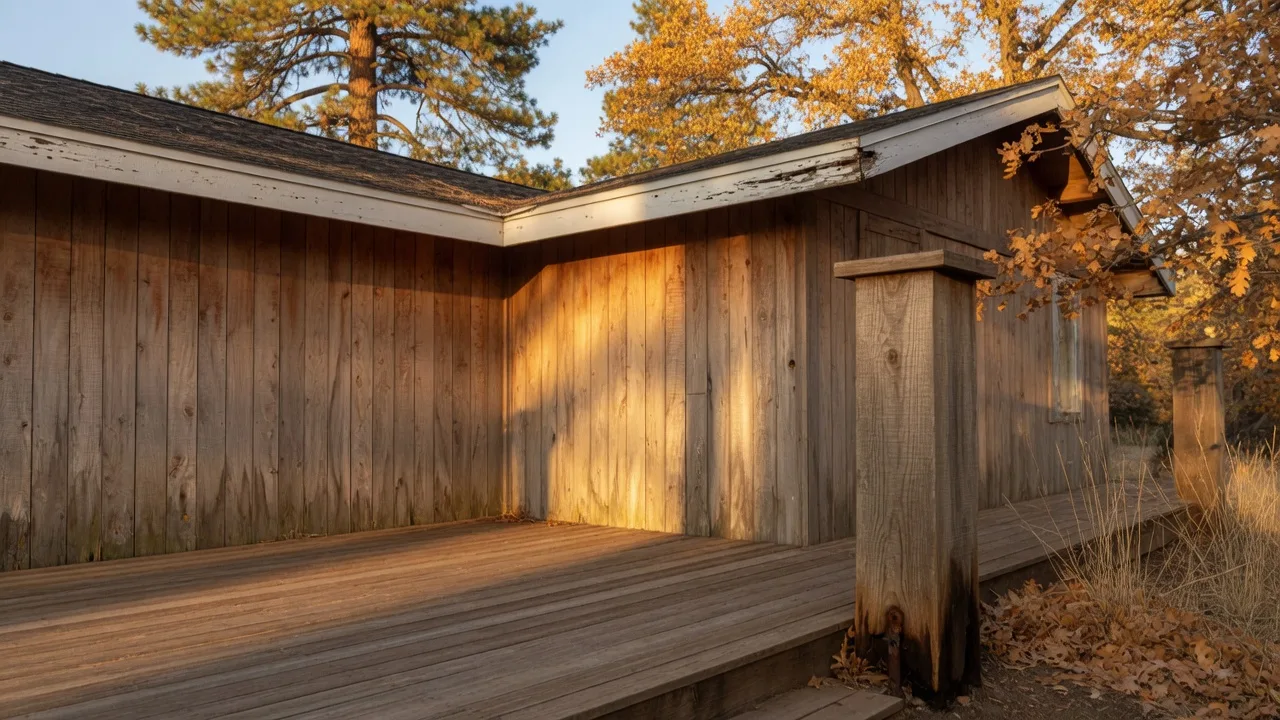
Up here in the foothills, most of what we find is dry rot. Don't let the name fool you. Dry rot is a fungus, and it needs moisture to grow. It shows up where wood stays wet: decks, siding, fascia boards, eaves, and around windows and doors. Earth-to-wood contact, like a deck post sitting right in the dirt, is one of the most common culprits.
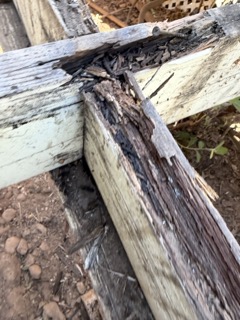
Termites do show up here sometimes, so it's not a guarantee. But on most foothill reports I see, the dollar amounts are tied to rotted wood, not bugs. And rotted wood is usually something we can plan for.
The questions sellers ask me most
Do I have to have the termite company do the repairs?
No. You can hire your own licensed contractor. The pest company will give you a bid, but you're not required to use them for the work.
Can I do some of the repairs myself? Or all of them?
You can do some or all of it, depending on the work. Small stuff, like replacing a rotted fascia board or regrading soil away from wood, is often manageable. Bigger structural repairs should go to a licensed pro.
So what's the catch?
Clearance. If the buyer or the buyer's lender requires a Section 1 clearance, the pest company has to come back and reinspect. They generally only certify work they performed or reinspected themselves, and reinspections can carry a fee. So the work has to be done right, and you want to know the rules before anyone picks up a hammer.
Why getting ahead of it before you list saves real money
I have saved my sellers $8,000 to $10,000 on their termite report. It's not magic. It comes from timing and experience.
When a termite report shows up in the middle of escrow with no context, a buyer sees the word "termite" and gets nervous. The buyer's side takes the pest company's bid, sometimes rounds it up, and asks for a credit. Now you're negotiating against the scariest version of the number.
Here's what we do instead, before the house ever hits the market:
- Walk the property and spot the likely problem areas: decks, siding, trim, anything with moisture or earth-to-wood contact.
- Decide which repairs make sense to knock out ahead of time, and which to leave for the report and the negotiation.
- Get fair bids from contractors I've worked with for years, people who do the work right and price it honestly.
- Order the inspection on your terms, so you know what's on the report before a buyer does.
I've been doing this since 1991, and my family's brokerage has been in this county since 1965. I know what an inspector is going to flag, and I know what it really costs to fix.
One important note: this is about fixing problems, not hiding them. California sellers still have to disclose known past issues and repairs. You fix it, you disclose it, and it's done right. That protects you and the buyer.
Thinking about selling in the foothills?
If you're planning to list in El Dorado Hills, Cameron Park, Shingle Springs, Placerville, or anywhere in the foothills, let's walk your property first. A little planning before the termite inspection can keep thousands of dollars in your pocket.
Call or text 530-409-8351, or email zeller123@gmail.com.
Zeller Real Estate · El Dorado County · Est. 1965 · DRE #01128501
Doug Zeller
Broker, Zeller Real Estate. 35 years in the Sierra foothills. DRE #01128501. He signs every reply the same way: take care.